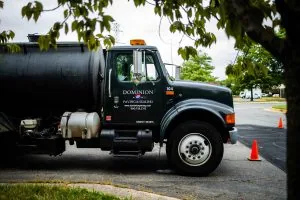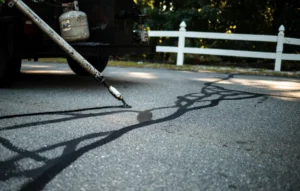
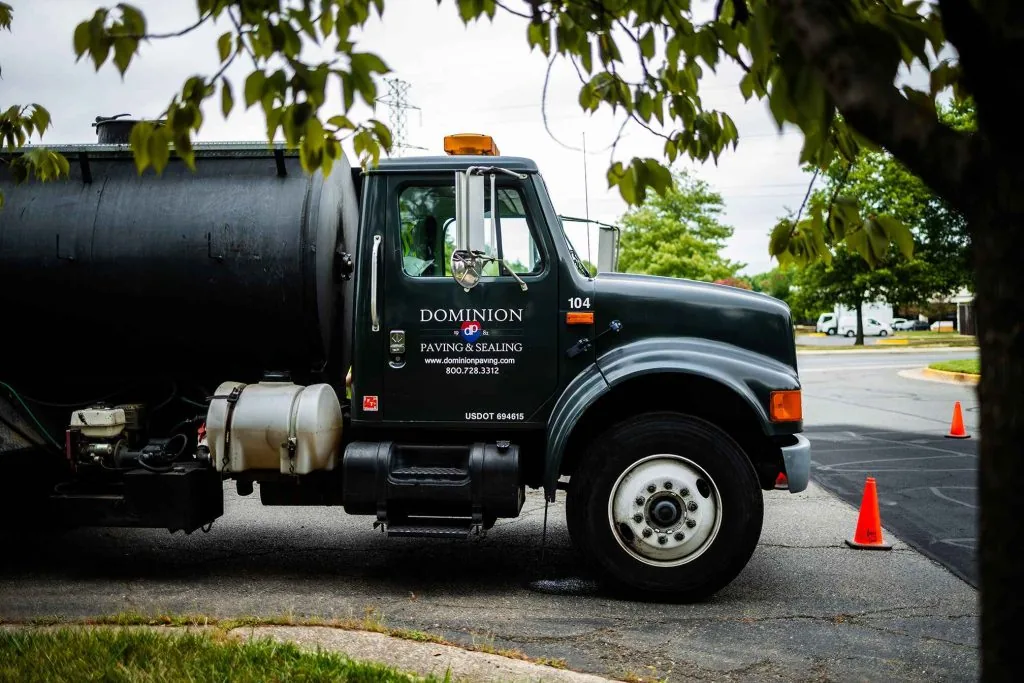
Parking lot sealcoating is a preventive maintenance service that protects structurally sound asphalt from surface wear, oxidation, moisture, and everyday traffic. The process involves applying a protective coating to a clean, prepared asphalt surface and letting it cure before reopening the area to vehicles.
Summer is a practical time for property managers to inspect their pavement for signs of wear. Look for fading, rough texture, worn traffic lanes, fine cracks, and exposed aggregate, all of which indicate that an older protective coating is wearing away.
Dominion Paving has served commercial properties throughout Northern Virginia, Maryland, Eastern West Virginia, and Washington, D.C., since 1982. In this guide, we leverage our expertise to outline the visible indicators that it’s time to schedule a professional sealcoating assessment.
Six Signs Your Parking Lot May Be Ready for Sealcoating
You can spot many early signs of pavement wear with a simple walk-through of your property. Consider the pavement as a whole, including traffic patterns, drainage, previous maintenance, and structural condition. Here’s what to look for:
1. The Asphalt Has Faded From Black to Gray
As asphalt ages, oxidation and weather exposure can fade its surface from black to gray. Widespread graying across the lot is more meaningful than one isolated discolored area. Compare heavily exposed areas with pavement near curbs, islands, or other lower-traffic sections.
While color alone doesn’t tell you whether the pavement is structurally sound, noticeable fading indicates that it’s time to schedule an assessment before further deterioration develops.
2. The Previous Coating Is Worn in High-Traffic Areas
Entrances, exits, drive lanes, loading zones, dumpster access areas, and sharp turning points often wear faster than protected parts of a parking lot. This type of damage comes from friction and repeated use: braking, turning, and deliveries gradually wear down the coating itself, even when the asphalt underneath is still in good shape. You may notice color or texture differences between lightly used parking areas and busy traffic lanes.
Localized wear does not always mean the entire parking lot needs treatment. A paving contractor can evaluate the affected areas and determine whether targeted maintenance or broader parking lot sealcoating makes the most sense.
3. The Surface Looks Dry, Porous, or Increasingly Rough
Healthy asphalt generally has a relatively uniform surface. As it ages, the texture changes and pavement may begin to look increasingly dry, porous, or rough.
Preventitive maintenance may still be effective for early surface wear. But loose material or advanced deterioration is different. If the pavement is beginning to break apart rather than simply look weathered, sealcoating alone may not be enough.
4. Fine, Isolated Cracks Are Beginning to Appear
Small, isolated cracks are another sign to watch for, but they often point to an entirely different problem than surface wear. Cracking usually starts below the surface, driven by moisture infiltration, temperature swings, or age, rather than traffic patterns. As cracks grow, they allow water to reach deeper into the pavement and accelerate further deterioration.
Sealcoating protects the asphalt surface, but it is not a substitute for crack filling. Dominion’s crack filling guide explains how proper crack treatment limits water infiltration and protects against further pavement damage.
5. Aggregate Is Becoming More Visible
Aggregate is the small stone material within an asphalt mixture. As the pavement surface wears, these stones may become increasingly visible. Look for areas that appear lighter, rougher, or coarser than the surrounding pavement. Visible aggregate indicates surface wear, while loose stone collecting across the lot may point to more advanced raveling.
If the surface is actively breaking apart, schedule a professional evaluation before sealcoating, as more extensive deterioration may require repairs or rehabilitation first.
6. The Previous Sealcoat Appears to Have Worn Away
If maintenance records are available, check when you last sealcoated your parking lot. Dominion generally recommends evaluating sealcoating needs every two to three years, but traffic volume, sunlight, weather, previous preparation, and the product used all affect how quickly a treatment wears. Look for widespread fading, exposed traffic lanes, uneven color, and areas where the previous coating is no longer uniform.
Signs Your Parking Lot Needs Repairs Before Sealcoating
Commercial parking lot sealcoating protects and rejuvenates the asphalt surface. It does not restore structural strength or correct underlying pavement failures. Applying sealcoating over significant damage can cover the symptoms without addressing the root cause.
Watch for these repairs-first warning signs:
- Potholes: Missing or broken pavement may indicate deterioration below the surface. Schedule pothole and patching repairs before sealcoating.
- Alligator cracking: Interconnected cracks that resemble reptile scales can indicate deeper pavement or base failure and may require reconstruction.
- Large or expanding cracks: Evaluate these for the appropriate crack treatment or repair based on their type, movement, depth, and surrounding pavement condition.
- Depressions and rutting: Low spots and wheel-path depressions may indicate settlement or structural movement. Sealcoating cannot restore the pavement’s elevation.
- Standing water: Ponding can result from settlement, blocked drainage, improper slope, or depressions. Address the underlying drainage problem first.
- Substantial raveling: Widespread loose aggregate can indicate that deterioration has moved beyond ordinary preventative maintenance.
- Soft or unstable areas: Asphalt that moves or deforms under traffic may have underlying structural or base problems that require assessment.
Why Summer Is a Practical Time to Inspect Your Parking Lot
Longer daylight and warmer weather make summer a convenient time to walk your lot and identify fading, cracking, surface wear, and drainage concerns. Summer also offers ideal conditions for sealcoating when the pavement is clean and dry, and the forecast is free of rainfall, extreme temperatures, or high humidity. Especially in the Mid-Atlantic, summer inspections give property managers a chance to identify pavement problems before winter’s freeze-thaw cycle.
Plan Sealcoating and Parking Lot Striping Together
Sealcoating covers existing pavement markings, so it often makes sense to simplify scheduling by coordinating parking lot sealcoating and striping in the same project. After the sealcoat cures, you can repaint parking stalls, traffic arrows, crosswalks, fire lanes, loading zones, accessible spaces, and access aisles as needed.
Restriping also gives property managers an opportunity to review accessibility needs. Keep in mind that markings alone do not make a parking lot ADA compliant. Accessible parking requirements also include space quantities, dimensions, access aisles, signage, and slopes.
Summer Parking Lot Inspection Checklist
Use this sealcoating checklist during your next property walk-through:
- Review when the parking lot was last sealcoated, if records are available.
- Photograph or map problem areas before requesting an assessment.
- Compare asphalt color in high-traffic and protected areas.
- Look for sections that have faded from black to gray.
- Inspect entrances, exits, loading areas, and turning points for heavier wear.
- Check for dry, porous, or increasingly rough pavement.
- Identify isolated cracks and areas with interconnected alligator cracking.
- Look for exposed aggregate, loose stone, or raveling.
- Record potholes, depressions, rutting, and soft areas.
- Check for standing water after rainfall.
- Note oil or fuel contamination.
- Evaluate the visibility of parking lines and traffic markings.
Request a Parking Lot Assessment From Dominion Paving
Knowing what to look for can help you catch pavement wear early, but a professional assessment ultimately determines whether your lot needs sealcoating, preparatory repairs, or a more extensive pavement solution.
Since 1982, Dominion Paving has served commercial properties throughout Northern Virginia, Maryland, Eastern West Virginia, and Washington, D.C. Our team coordinates parking lot sealcoating and pavement repairs based on your property’s condition and maintenance needs.
If your parking lot is showing several of the warning signs outlined above, schedule an assessment with Dominion Paving to determine the right next step.
FAQ — Parking Lot Sealcoating
How often does a parking lot need sealcoating?
Dominion generally recommends evaluating sealcoating needs every two to three years. The right schedule depends on traffic, weather exposure, previous maintenance, and the asphalt’s current condition.
How much does parking lot sealcoating cost?
Parking lot sealcoating cost depends on lot size, pavement condition, and whether preparatory repairs are needed. Schedule a site assessment, and we’ll provide a quote based on the actual scope of work.
Can you sealcoat a parking lot with cracks?
Small surface cracks may require different treatment than larger or moving cracks. Evaluate cracking before sealcoating, and address structural failures such as alligator cracking or potholes first.
How long does parking lot sealcoating take to dry?
Drying and curing depend on the product, temperature, humidity, and site conditions. Dominion typically keeps vehicle traffic off treated pavement for at least 24 hours, with reopening based on curing conditions.
Does newly paved asphalt need immediate sealcoating?
No. Newly installed asphalt needs time to cure, and a properly constructed new parking lot generally should not require immediate sealcoating. The pavement’s condition, product requirements, and professional assessment should determine when the first treatment is appropriate.