If you’re planning a paving project, you’ve probably already heard strong opinions about asphalt and concrete. One person says asphalt is cheaper. Another says concrete lasts longer. Then someone else tells you the answer depends on the property. The truth is, all three can be right.
When comparing concrete vs. asphalt, the best choice depends on how the pavement will be used, how much traffic it will handle, and your goals. A truck court, office park, retail center, and private roadway may all reach different conclusions for perfectly valid reasons.
In this guide, we’ll walk through the key differences between asphalt paving and concrete so you can make an informed decision for your property.
Table of Contents
Understanding Asphalt vs. Concrete: Material Composition and Properties
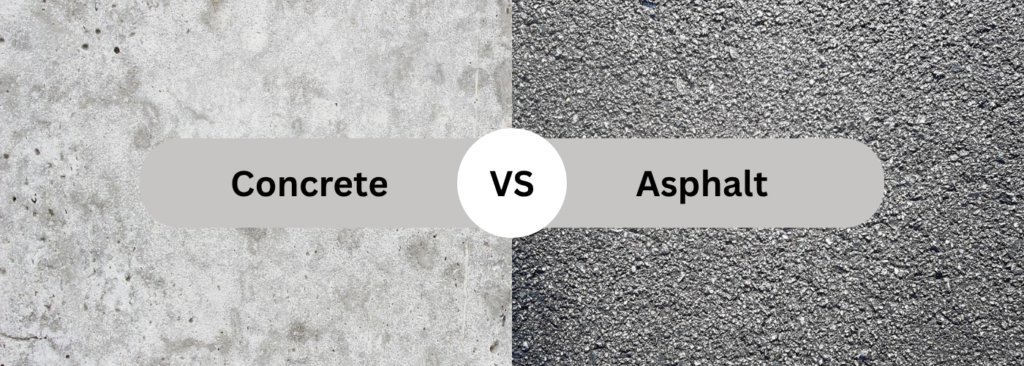
Both asphalt and concrete create durable surfaces for pedestrians and traffic. The difference is how the material handles the day-to-day demands placed on it.
What Makes Asphalt Different
There’s a reason asphalt is the most common pavement surface for commercial parking lots and roadways throughout Virginia and Maryland. It performs well in our climate, can be installed relatively quickly, and gives property owners several options for managing wear over time.
- Flexibility: Accommodates seasonal expansion and contraction caused by freeze-thaw cycles.
- Faster Turnaround: Many asphalt surfaces can support traffic within 24 to 48 hours after installation, depending on project conditions.
- Repair Options: Maintenance strategies such as crack filling, patching, resurfacing, and infrared asphalt repairs can address localized damage without a full rebuild.
With proper maintenance, many commercial asphalt pavements provide 15 to 25 years of service before they require major rehabilitation.
Concrete's Structural Advantages
Concrete is often chosen for surfaces that experience concentrated loads and heavy vehicle traffic. Spaces like loading docks and truck aprons are common examples where its strength provides long-term performance advantages.
A few reasons property owners choose concrete include:
- Load Capacity: Well-suited for areas that regularly support heavy trucks and equipment.
- Long Service Life: Properly designed concrete pavements can remain in service for decades.
- Light Reflectivity: Reflects more sunlight than asphalt, helping reduce surface temperatures during warmer months.
According to the American Cement Association, concrete pavement lasts 30 to 50 years in commercial applications. For some properties, its longevity can justify the higher initial investment.
Cost Analysis: Asphalt vs. Concrete Pricing Breakdown
Cost is usually a high priority when comparing pavement materials. While asphalt often carries a lower upfront cost than concrete, installation expenses are only part of the equation. Maintenance frequency, repairs, and expected lifespan all influence long-term costs.
Initial Installation Costs
In most commercial paving projects, asphalt typically costs less upfront than concrete. The exact difference depends on factors such as pavement thickness, drainage requirements, site conditions, material availability, and project size.
Base preparation can have just as much impact on project costs as the surface material itself. Weak soils, poor drainage, and unstable subgrades often require corrective work before paving begins. Depending on site conditions, soil stabilization may be recommended to improve long-term pavement performance and support a stronger foundation.
Maintenance and Lifecycle Costs
The Federal Highway Administration recommends considering future maintenance, rehabilitation, and replacement expenses alongside initial construction costs when evaluating pavement options.
Asphalt generally requires routine upkeep, but many repairs can be completed without replacing large sections of pavement. Concrete often requires less frequent maintenance, though repairs are often more complex when damage occurs.
Installation Process: How Each Material is Installed
The installation process of each material also influences project costs and timelines.
Asphalt Installation Steps
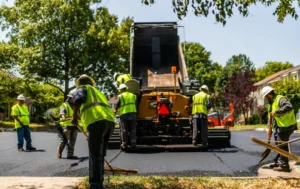
Most asphalt projects begin with site preparation, grading, and making necessary repairs to the existing base. Once the foundation is ready, crews install and compact hot-mix asphalt, then finish the surface and restore pavement markings.
For existing pavement surfaces, rehabilitation methods such as milling may be used instead of full reconstruction. In some situations, asphalt overlay services can help extend pavement life while reducing costs and disruption compared to a complete replacement.
Concrete Installation Process
Concrete installation also begins with excavation, grading, and sub-base preparation. Once the site is ready, forms and reinforcement are installed before the concrete is poured, finished, and cured.
One of the biggest differences between asphalt and concrete is the curing process, as concrete typically requires more time to support regular traffic and heavy loads. That may not matter much on some projects, but it can influence planning on active commercial properties.
Best Applications: When to Choose Asphalt vs. Concrete
Two properties can have similar budgets yet completely different paving needs.
Ideal Asphalt Applications
Asphalt is commonly selected for:
- Commercial parking lots
- Office parks
- Retail centers
- Private roadways
- HOA and community roads
- Facilities that benefit from faster project completion
When Concrete is the Better Choice
Concrete is often ideal for:
- Loading docks
- Truck aprons
- Distribution facilities
- Industrial yards
- Heavy equipment storage areas
- Locations with concentrated traffic loads
Common Mistakes When Choosing Between Asphalt and Concrete
When comparing asphalt vs. concrete, it’s easy to focus on the material itself and overlook some of the factors that have the biggest impact on long-term performance.
Common mistakes include:
- Ignoring Drainage and Soil Conditions: Poor drainage, unstable soils, and inadequate base preparation can shorten the life of asphalt and concrete.
- Focusing Only on Upfront Costs: Lower initial investments may require more maintenance over time.
- Overlooking Local Climate Conditions: Freeze-thaw cycles, temperature swings, and heavy rainfall throughout Virginia and Maryland can affect pavement performance and maintenance requirements.
- Treating Pavement as a One-Time Purchase: Regular inspections and preventative maintenance help identify small issues before they become larger, more expensive repairs.
- Choosing Based on Appearance Alone: While aesthetics may influence the decision, the ability to withstand heavy traffic loads, operational needs, and maintenance expectations often play a much bigger role in long-term satisfaction.
Professional Installation Best Practices
Whether you choose asphalt or concrete, long-term performance depends on proper planning, site conditions, drainage, and construction quality. Many pavement failures start below the surface, which is why evaluating the site before paving begins is just as important as selecting the material itself.
Site Preparation Essentials
Contractors should evaluate:
- Soil conditions and load-bearing capacity
- Drainage patterns and water management
- Existing pavement conditions
- Expected traffic volumes and vehicle types
Addressing these factors early can help reduce cracking, settlement, and other issues that shorten pavement life. For rehabilitation projects, specialized edge milling services can improve transitions between pavement surfaces and maintain proper grades, while regular inspections and preventative maintenance help catch small problems before they become larger repairs.
Need Help Choosing Between Concrete and Asphalt?
The best pavement isn’t necessarily the one that lasts the longest or costs the least upfront. It’s the one that’s built for the realities of your property.
Since 1982, Dominion Paving has helped property owners and managers across Virginia and Maryland make informed paving decisions based on how their facilities are used today and how they’ll be used in the years ahead. If you’re planning a project and need help evaluating concrete vs. asphalt for your property, we’re here to help.
Give us a call today and let us start paving the way for your project.
Frequently Asked Questions
Which lasts longer, asphalt or concrete pavement?
Concrete typically has a longer lifespan, with many commercial pavements lasting 30 to 50 years. Asphalt generally lasts 15 to 25 years but is often easier and less expensive to repair.
Is asphalt cheaper than concrete?
Usually, yes. Asphalt often costs less upfront but requires more maintenance and doesn’t last as long as concrete.
Can asphalt be installed over existing concrete?
Sometimes. If the existing concrete is in good structural condition, an asphalt overlay may be an option. A site evaluation is the best way to determine whether it’s a good fit.
Which performs better in cold climates?
Asphalt is often favored in colder climates because its structural flexibility better handles freeze-thaw cycles and seasonal movement.
Does asphalt or concrete require more maintenance?
Asphalt generally requires more routine maintenance. The tradeoff is that concrete repairs can be more involved when they become necessary.