Your asphalt might look fine from the surface, but the mix beneath it can have a big impact on how the pavement performs over time. Some mixes are designed to handle constant truck traffic, while others are built to improve drainage or withstand more demanding conditions.
Understanding the types of asphalt mixes makes it easier to choose the right material for your next paving project. In this guide, we’ll break down the most common asphalt mix categories, where they’re typically used, and what factors can influence the right choice for your property.
Table of Contents
Understanding Hot Mix Asphalt (HMA) Varieties
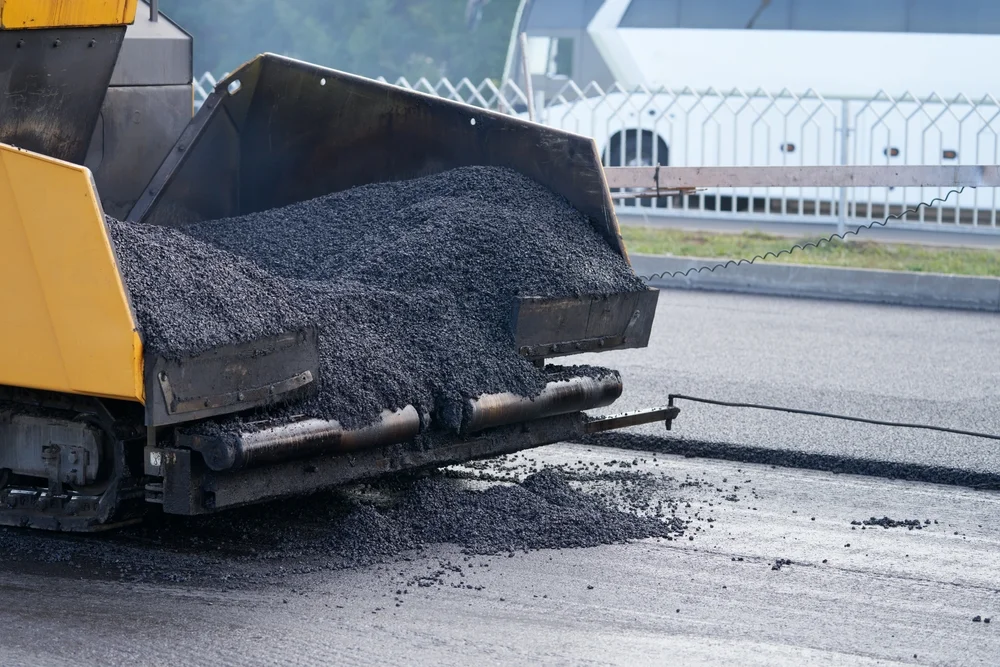
Hot mix asphalt (HMA) is the most commonly used paving material for commercial parking lots, roadways, and other high-traffic surfaces. Produced at temperatures between approximately 300°F and 350°F, it provides the strength and durability needed to handle daily traffic and changing weather conditions.
The combination of aggregate, asphalt binder, and additives can be adjusted to achieve different performance goals. Below are some of the most common asphalt mix types used in commercial paving projects and where they perform best.
- Dense-Graded Mixes (Most Common): Dense-graded mixes are the most widely used asphalt mixes for commercial paving projects, according to the Federal Highway Administration. Their tightly packed aggregate structure creates a durable surface that performs well under everyday traffic. They’re often chosen for parking lots and municipal streets because they deliver dependable performance without the added cost of specialty mixes.
- Open-Graded Mixes (Drainage-Focused): Open-graded mixes are designed to move water away from the pavement surface. Their larger air voids allow water to pass through rather than collect on top. They’re often considered when drainage is a priority, though they may require more maintenance than a traditional dense-graded surface.
- Gap-Graded Mixes (Specialty Applications): Gap-graded mixes, including stone matrix asphalt (SMA), are built for high-stress environments. Their stone-on-stone aggregate structure helps resist rutting and deformation caused by heavy traffic. While they typically cost more than dense-graded mixes, they’re often used where frequent truck traffic places extra stress on the pavement.
Cold Mix Asphalt Applications and Limitations
Cold mix asphalt offers more flexibility than hot mix asphalt because it is produced and installed at lower temperatures. That makes it a practical option for temporary repairs, cooler weather conditions, and situations requiring a quick fix.
The tradeoff is durability. Cold mix asphalt generally doesn’t provide the same strength or lifespan as hot mix asphalt, which is why it’s often viewed as a short-term solution. In many cases, using cold mix to address a problem early can help limit further deterioration until permanent patching and pothole repairs can be scheduled.
For longer-lasting results, property owners often schedule infrared asphalt repairs or more extensive pavement rehabilitation.
Emulsion-Based Cold Mixes
Most cold mix products used today are emulsion-based. They use an asphalt binder suspended in water, allowing the material to remain workable without the high temperatures required for hot-mix asphalt.
As the water evaporates, the mix gradually cures and gains strength. While effective for temporary repairs, emulsion-based cold mixes are not intended to replace a properly installed hot mix pavement and tend to perform best in lower-traffic applications.
Cutback Asphalt Considerations
Cutback asphalt uses petroleum-based solvents to improve workability at lower temperatures. Once common throughout the industry, its use has declined due to environmental regulations and emissions concerns.
Today, it’s generally limited to specialized applications where project specifications still permit it. For most commercial paving projects, contractors are more likely to use emulsion-based cold mixes or traditional hot mix asphalt.
Recycled Asphalt Pavement (RAP) Integration
Recycled Asphalt Pavement (RAP) has become a common part of modern asphalt production. Rather than sending old pavement materials to a landfill, contractors can process and incorporate reclaimed asphalt into new mixes.
- RAP Content: Surface courses typically use lower RAP percentages, while base layers can often accommodate recycled material. The appropriate amount depends on the project requirements and desired performance.
- Quality Control: Recycled materials must be screened and tested for contaminants before they are incorporated into a new mix. Performing these checks helps ensure quality performance in the long run.
- Full Depth Reclamation: In certain cases, contractors reuse existing pavement materials on-site through Full Depth Reclamation (FDR). This process creates a new base layer while reducing waste and material hauling.
Warm Mix Asphalt (WMA) Technology Advantages
Warm Mix Asphalt (WMA) is produced at lower temperatures than traditional hot mix asphalt, often 50°F to 100°F, reducing fuel consumption and emissions during production. It may also extend the paving season by allowing work to continue in cooler conditions. For many projects, WMA delivers performance comparable to traditional hot-mix asphalt.
Several technologies can be used to produce warm mix asphalt. Some use water to create a foaming effect within the asphalt binder, while others rely on additives that improve workability at lower temperatures.
Polymer-Modified Asphalt for High-Performance Applications
Facilities with heavy traffic, frequent truckloads, or challenging weather conditions may benefit from polymer-modified asphalt. By modifying the asphalt binder, these mixes can improve flexibility and resistance to cracking or rutting. At a higher cost, they’re typically reserved for applications where the added performance justifies the investment.
- SBS-Modified Asphalt: Styrene-butadiene-styrene (SBS) is one of the most common polymer modifiers used in asphalt. It helps pavement remain flexible in colder temperatures while improving resistance to rutting and deformation in hotter weather. SBS-modified asphalt is often used on high-traffic roadways and commercial properties that need added durability.
- Crumb Rubber Modified Asphalt: This mix incorporates recycled tire rubber into the asphalt binder. It improves flexibility, helps reduce roadway noise, and performs well in areas with significant temperature swings. Crumb rubber modified asphalt is often considered for projects exposed to harsh weather or repeated traffic loading.
Choosing the Right Asphalt Mix
Understanding the different types of asphalt mixes is a great starting point, but the best choice depends on your pavement’s use. A parking lot that serves occasional visitors may require a different approach than a distribution center with constant truck traffic.
If you’re planning a paving project, Dominion Paving is here to help.
Our professional paving services include a site evaluation to identify the mix that best aligns with both your budget and long-term performance goals.
Frequently Asked Questions About Choosing the Right Asphalt
Which asphalt mix type lasts longest for commercial parking lots?
Dense-graded hot mix asphalt is often the most practical choice for commercial parking lots because it provides a strong balance of durability, longevity, and cost. In higher-stress environments, polymer-modified mixes may offer additional service life.
Can multiple types of asphalt mixes be used together in one project?
Yes. Many paving projects use different mixes for different layers. A stronger base mix may provide structural support, while the surface mix is selected for ride quality, durability, or drainage performance.
How much more does warm mix asphalt cost compared to standard hot mix?
Costs vary by project, location, and production methods. While warm mix asphalt carries a modest upfront premium, it may offer scheduling and operational advantages that make it worth considering for certain projects.
What's the difference between recycled and virgin asphalt performance?
When properly processed and tested, recycled asphalt pavement (RAP) performs similarly to virgin asphalt in many applications. Mix design and quality control play an important role in achieving consistent results.
Which asphalt mix works best in extreme weather climates?
Polymer-modified asphalt is often selected for climates with significant temperature swings because it can provide greater flexibility in cold weather and improved resistance to deformation during hot weather.
Contact Dominion Paving For Your Asphalt Needs
Don’t wait until minor pavement issues turn into costly repairs. Call Dominion Paving at (800) 728-3312 for professional commercial asphalt paving services. With over 40 years of experience, our team understands the importance of maintaining safe, durable, and visually appealing pavement that supports your daily business operations.
From new asphalt installations and resurfacing to repairs, maintenance, and parking lot improvements, we have the expertise and equipment to handle projects of any size. Our experienced crews deliver high-quality results efficiently, minimizing disruptions while ensuring your pavement remains functional, attractive, and built to last.
Call Dominion Paving and get a quote today. Our paving experts provide premium asphalt paving services for business owners across Northern Virginia, Maryland, Eastern West Virginia, and the D.C Metro area.