
When pavement problems keep coming back, property managers face a key decision: repair the damage or replace the asphalt. The asphalt repair vs. replacement debate depends on the type and extent of damage, with targeted repairs, resurfacing, and replacement addressing different pavement conditions.
Dominion Paving serves commercial properties across Northern Virginia, Maryland, Eastern West Virginia, and the Washington, D.C. metro area. This guide explains how each option works, what pavement conditions point toward repair or replacement, and what to consider before approving your next paving project.
The Core Difference: What Repair and Replacement Actually Mean
Repair, resurfacing, and replacement address different levels of pavement damage. The right option depends on the size of the affected area, the depth of the damage, and the condition of the pavement underneath.
| Repair | Resurfacing | Replacement | |
|---|---|---|---|
| Best for | Localized damage | Worn surfaces with a stable foundation | Widespread or deeper failure |
| Scope | Treats problem areas | Adds a new asphalt layer | Removes and rebuilds pavement |
| Underlying Issues |
Addresses localized problems | May require repairs first | Addresses deeper issues as needed |
| Access | Smaller work zones | Moderate disruption | Larger work zones |
What Counts as Asphalt Repair?
Asphalt repair includes crack treatment, surface patching, full-depth patching, and infrared asphalt repair. Full-depth patching rebuilds a failed section, while infrared repair reheats and reworks suitable existing asphalt to address localized damage.
What Is Full-Depth Replacement?
Full-depth replacement removes damaged asphalt and addresses underlying conditions before crews install new pavement. Contractors determine the removal depth, base work, and pavement structure based on site conditions and expected traffic.
Where Does Resurfacing (Overlay) Fit In?
Asphalt resurfacing adds a new asphalt layer over prepared pavement when the underlying structure remains suitable. Crews may complete localized repairs or asphalt milling and reclamation first, depending on pavement condition, drainage, and elevations.
When Patching or Repair Is the Right Call
When comparing asphalt repair vs. replacement, targeted repairs often make sense when damage is localized, and the surrounding pavement remains serviceable. For example, a parking lot with damage concentrated around a loading area may only need repairs in that section rather than reconstruction across the entire lot.
Damage Is Isolated and the Surrounding Pavement Is Sound
A contractor will assess whether the damaged area needs surface treatment, deeper removal, or asphalt patching, and pothole repair. Document where damage appears, how large it becomes, and whether it keeps returning before requesting an assessment.
Pavement Condition and Repair History Support Further Repairs
Pavement age, previous repairs, traffic, drainage, and current damage all shape the repair recommendation. Two lots of the same age may require different work, especially if one has recurring failures while previous repairs on the other remain serviceable.
Budget Constraints Require a Phased Approach
Phased work lets property owners address immediate hazards and heavily used areas while planning larger improvements around budgets, tenant access, and deliveries. Formulating a parking lot maintenance plan helps property managers identify current repairs, unresolved conditions, future work, and inspection needs.
When Full Replacement Is the Right Call
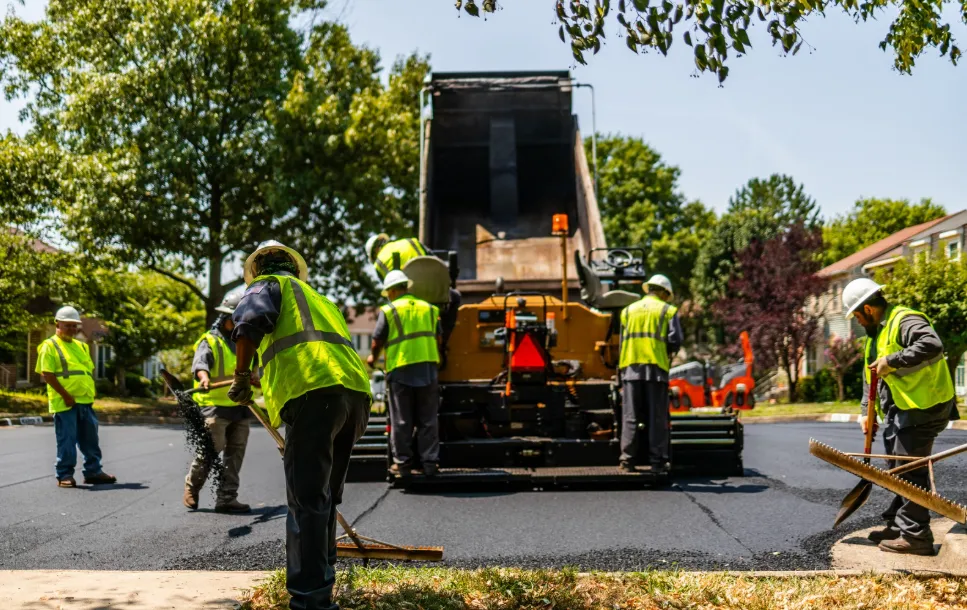
Full replacement makes more sense when deterioration spreads across the pavement or repaired areas repeatedly fail. A contractor will assess the extent of the damage, underlying conditions, property operations, and long-term pavement needs before recommending the scope of work.
Structural Problems Extend Beyond Isolated Areas
Widespread deformation, failed patches, and interconnected cracking point to problems below the pavement surface. A contractor will investigate the cause and determine whether the property needs localized repairs or broader reconstruction.
Widespread Damage Makes Repeated Repairs Less Practical
The severity, depth, location, and repair history of the damage determine whether continued patching remains practical. Repeated repairs also bring recurring closures and disruptions, so property owners should ask how each proposed option addresses the underlying problems.
Aging Pavement Has Multiple Recurring Problems
Age matters most when recurring cracks, deformation, drainage issues, and failed repairs develop together. Broader rehabilitation may be more practical, with future traffic and property use shaping the new pavement scope.
The 4 Biggest Mistakes Property Owners Make on This Decision
Choosing between repair and replacement requires more than comparing prices. Avoid these four mistakes when reviewing pavement conditions and contractor proposals.
Mistake 1: Treating the Surface Without Addressing the Cause
Covering visible damage does not address the conditions that caused repeated failure.
Ask: “What caused this area to fail, and how will the proposed repair address it?”
Mistake 2: Assuming Sealcoating Can Replace Needed Repairs
Sealcoating protects suitable pavement surfaces but does not repair structural deterioration.
Ask: “Which repairs need to be completed before a protective surface treatment is appropriate?”
Mistake 3: Comparing Prices Without Comparing Scope
Removal depth, base repairs, paving thickness, drainage corrections, striping, and access requirements all affect a proposal.
Ask: “Are these proposals addressing the same area, depth, and underlying problems?”
Mistake 4: Waiting Until Damage Disrupts Operations
Waiting may lead to urgent closures, restricted deliveries, and less scheduling flexibility.
Schedule an assessment before the next budget cycle so you can plan immediate repairs and larger projects together.
How Dominion Paving Evaluates Your Pavement Before Making a Recommendation
Dominion Paving’s asphalt services evaluate visible damage, underlying pavement conditions, and maintenance history before recommending a scope of work. We encourage property managers to share records and operational goals that may influence the project.
Step 1: Visual Surface Inspection
The assessment starts with the type, severity, and location of visible pavement damage. Previous patches, drainage concerns, heavy-traffic areas, and frequent turning zones may identify areas that require closer investigation.
Step 2: Base and Sub-Base Assessment
The contractor evaluates whether damage affects only the pavement surface or extends into the supporting layers. These findings guide the choice between localized repair and broader rehabilitation.
Step 3: Pavement Age and Maintenance History Review
Installation dates, repair invoices, photos, and records of recurring problems provide useful context alongside current pavement conditions. Property managers should also share delivery schedules, access requirements, budget timing, and planned property changes before they request a pavement assessment.
FAQs
How do I know if my asphalt needs repair or full replacement?
When comparing asphalt repair vs. replacement, look at the extent of the damage and whether previous repairs keep failing. Localized damage may suit targeted repairs, while widespread deterioration may require resurfacing or replacement.
Is asphalt resurfacing the same as replacement?
No. Asphalt resurfacing adds a new asphalt layer over prepared pavement, while replacement removes the existing asphalt in the work area before crews rebuild it.
How long does asphalt patching last?
Patch lifespan depends on the repair method, preparation, underlying support, drainage, and traffic. Repairs that address the cause of the damage generally provide longer service than temporary surface patches.
What is the cost difference between asphalt repair and full replacement?
Repairing a limited area generally costs less upfront than replacing a larger section. When reviewing costs, compare removal depth, base repairs, drainage work, paving requirements, and recurring repair needs.
Can you patch asphalt in winter in Virginia?
Yes, contractors may perform some asphalt repairs during winter when weather, pavement conditions, and repair materials allow. Temporary patching may address immediate hazards until conditions support more permanent work.